May 1st, 2026
Why Every DMV Driver Should Consider a Dashcam
Posted in: Personal Injury
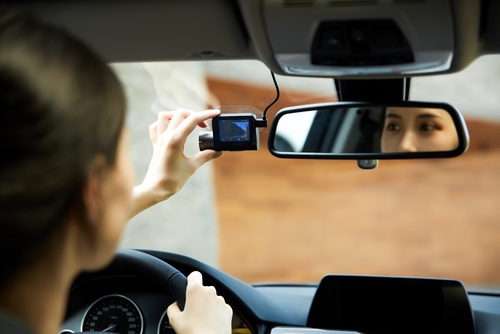
If you drive anywhere in the D.C., Maryland, and Virginia area, you already know the risks: aggressive merging on the Beltway, sudden stops on I-270, and parking lot fender-benders that turn into heated disputes.
But here is something many DMV drivers do not realize, Maryland, D.C., and Virginia are among only five jurisdictions in the entire United States that still follow contributory negligence rules. Note that D.C. partially reformed its contributory negligence doctrine in 2021 for vulnerable road users such as pedestrians and cyclists, though the contributory negligence bar remains for most claimants, including car accident victims. The others are Alabama and North Carolina. All 46 other states use comparative negligence systems that allow partial recovery even when you share fault.
That means if the other driver’s insurance company can argue you bore any fault, however slight, you could be barred from recovering any compensation. In a legal environment that demanding, the difference between a successful claim and a denied one often comes down to evidence. A dashcam costing less than a single car payment can provide exactly the kind of objective, time-stamped proof that strengthens your position when it matters most.
Even with a dashcam, navigating an insurance claim or personal injury case after an accident can be complicated. Stein Sperling has decades of experience helping drivers across D.C., Maryland, and Virginia use every piece of available evidence to secure the compensation they deserve. If you’ve been in an accident, contact us or call 301-738-2222 to discuss your case.
Are Dashcams Legal in Maryland, D.C., and Virginia?
Dashcams are legal in all three DMV jurisdictions, but placement rules vary.
Virginia is the only one of the three that has a statute directly addressing dashboard cameras: VA Code § 46.2-1054 explicitly permits dashboard cameras concealed behind the rearview mirror.
Maryland’s Transportation Code § 21-1104 does not mention cameras specifically but sets requirements to ensure that a driver’s view is not obstructed, and camera placement should keep that in mind.
In Washington, D.C., 18 DCMR § 2213 addresses windshield obstructions and should be considered when deciding where to mount your camera.
Since most DMV drivers cross all three jurisdictions regularly, mounting your camera in such a way as to not obstruct your view, whether on the dashboard or behind the mirror, is a critical component to being compliant with these regulations.
-
Maryland (MD Transportation Code § 21-1104):
-
Does not specifically address cameras but requires that the driver’s view not be obstructed
-
Camera placement should be chosen with this requirement in mind
-
Virginia (VA Code § 46.2-1054):
-
Cannot obstruct driver’s view
-
Washington, D.C. (118 DCMR § 2213):
-
Addresses windshield obstructions
DMV-Safe Solution: The safest approach for DMV drivers is to disable audio recording entirely or post a visible notice in the vehicle and obtain consent from all passengers.

The Audio Recording Issue You Cannot Ignore
Maryland is an all-party consent state under Courts & Judicial Proceedings § 10-402, meaning every person in the vehicle must agree to audio recording. A violation is considered a felony and is punishable by up to five years in prison, a $10,000 fine, or both. It is also important to note that hidden cameras are prohibited in Maryland; however, courts generally do not consider dashboard cameras to fall into the same category as hidden cameras, which is an important distinction given the scope of this section.
Virginia and D.C. are one-party consent jurisdictions, but Virginia restricts use of recorded conversations in civil cases.
How Dashcam Footage Strengthens Your Accident Case
Proving Fault When It Is Your Word Against Theirs
Dashcam footage can show the other driver running a red light, changing lanes without signaling, or texting.
Consider a scenario at the I-495 and I-270 interchange, one of the most congested in the country. Another driver cuts across two lanes and clips your vehicle. Without video, their insurer may claim you were driving aggressively. Footage from a GPS-equipped dashcam documents not only what happened, but your exact speed and location, providing embedded proof that you were following traffic laws.
As the personal injury attorneys at Stein Sperling understand, this evidence can be decisive in a contributory negligence system.
Speeding Up Insurance Claims
Insurance adjusters rely on police reports and driver statements, both of which can be incomplete or contradictory. Dashcam footage gives adjusters an unbiased account that can accelerate the claims process significantly. Claims supported by video evidence are substantially less likely to be denied. All major carriers, including Progressive, GEICO, and State Farm, accept dashcam footage as part of the process.
Hit-and-Run Accidents and Uninsured Drivers
Although Washington, D.C. requires drivers to carry minimum liability insurance, many D.C. drivers carry only the minimum required coverage and may lack sufficient bodily injury liability coverage to compensate you for injuries. A driver may have basic property damage coverage but nothing to cover your medical bills or lost wages. A dashcam helps identify these drivers so you can pursue your own uninsured or underinsured motorist coverage.
Maryland’s fatal hit-and-run rate ranks among the worst nationally. A dashcam can capture license plates, vehicle descriptions, and details that police need to track down a fleeing driver. Even when the driver is never identified, footage strengthens your uninsured motorist claim.
Models with parking mode use motion sensors to record when your parked car is struck, capturing incidents you might never witness.
Protection Against Staged Accidents
Staged accident schemes cost American families hundreds of dollars annually in inflated premiums, and Maryland ranks among the top states for vehicle fraud cases. A dashcam recording the entire sequence, such as a driver cutting in front of you and slamming their brakes, can significantly undermine a false claim.
When Dashcam Footage Can Work Against You
Dashcams record everything, including your own driving behavior. In Virginia and D.C., if footage shows you exceeding the speed limit, opposing counsel or the insurer may use it to argue contributory negligence.
Maryland case law has addressed whether exceeding the speed limit constitutes contributory negligence, and, while speeding alone has not always been held sufficient to establish contributory negligence as a matter of law, it can be evidence of contributory negligence depending on the circumstances, including how fast the driver was going and whether the speed contributed to the accident. Separately, the Boulevard Rule (Transportation Article § 21-403)) governs right-of-way at intersections where one road is designated a through highway.
However, footage showing other infractions, such as rolling through a stop sign, or running a red light, can still be used against you in any DMV jurisdiction.
Under the DMV’s contributory negligence rules, any negligence on your part that contributed to the accident could bar your right to compensation. These distinctions underscore why consulting an attorney who understands the nuances of each jurisdiction is important.
Opposing counsel can also subpoena your dashcam footage during litigation.
Never Delete or Alter Dashcam Footage – Spoliation of Evidence
Deleting, editing, or destroying dashcam footage after an accident constitutes spoliation of evidence. Consequences include:
-
Adverse inference instructions: A judge may instruct the jury to assume the deleted footage was unfavorable to you
-
Civil sanctions: Courts may impose monetary penalties or other sanctions for destroying evidence
-
Case dismissal: In egregious cases, a court may dismiss your claim entirely as a sanction for spoliation
-
Criminal exposure: Deliberate destruction of evidence or lying about the existence of footage may result in obstruction of justice or fraud charges
Preserve all footage regardless of what it shows and consult with an attorney promptly.
Before making any decisions about your case, including what to do with your footage, consult a Stein Sperling attorney to understand your legal rights and options.
As we discuss in our guide on what to do immediately after a car collision, the steps you take in the first hours after an accident shape the outcome of your entire case.
The Last Clear Chance Exception:
Maryland recognizes a notable exception to contributory negligence: the Last Clear Chance doctrine. Even if you were contributorily negligent, you may still recover if:
-
The defendant had a final, separate opportunity to avoid the collision
-
The defendant was aware, or should have been aware, of the danger
-
The defendant failed to act to prevent the collision after the plaintiff’s negligence
Example: You have stalled in an intersection and cannot restart your vehicle. An approaching driver sees your stalled car from a distance with plenty of time to slow down or stop, but fails to brake and collides with you. Even though you were contributorily negligent for stalling in the intersection, dashcam footage showing that the other driver had a clear opportunity to avoid the collision may help to preserve your claim under the Last Clear Chance doctrine.
What to Do with Dashcam Footage After a Crash
Most dashcams use loop recording, meaning old footage is automatically overwritten as the memory card fills. After ensuring your safety and calling 911, press your dashcam’s manual lock button to prevent the file from being overwritten, or turn the camera off entirely. Remove the memory card and store it safely.
Transfer footage to a computer or cloud storage as soon as possible, keeping the original file with all metadata intact. Do not crop, edit, or alter the recording.
Most importantly, contact a Stein Sperling attorney to ensure your evidence is properly preserved and to understand the legal implications before making decisions about sharing footage.
Critical Deadline: Statutes of Limitations throughout the DMV
In Maryland and D.C., you have three years from the date of the accident to file a personal injury lawsuit. For wrongful death cases, the limit is three years from the date of death. However, Virginia has a two-year statute for personal injury claims.
Failure to file within the applicable deadline can result in dismissal of your case, regardless of the strength of your evidence. Timely action is essential to preserving your claim and ensuring dashcam footage remains relevant.
Choosing the Right Dashcam for DMV Driving
For DMV drivers, prioritize high resolution (at least 1440p, ideally 4K) for capturing license plates at highway speed, built-in GPS that logs your speed every second, night vision for dark winter commutes, and dual-channel recording (front and rear cameras) for congested corridors like I-95 and I-66. A G-sensor that auto-locks footage on impact is essential. Use a high-endurance micro SD card of at least 128GB and replace it every six to twelve months.
Frequently Asked Questions
Can a dashcam really make a difference in my car accident claim?
Yes. In the DMV’s contributory negligence system, the other driver’s insurer need only show that you were negligent in any way that contributed to the accident to bar your recovery. Dashcam footage with GPS data showing you were driving at the speed limit and obeying traffic laws can effectively counter that defense.
Can dashcam footage be used against me?
It can. Dashcam footage is discoverable in litigation, and if it shows even a minor traffic violation, it could be used to argue contributory negligence. This is why consulting a Stein Sperling attorney to understand the legal implications of your footage is critical before making decisions about your case.
Do I need to tell my passengers I am recording?
In Maryland, yes, it is a legal requirement under the state’s all-party consent law. The simplest solution is to disable audio or post a visible notice and verbally inform passengers. Adopting Maryland’s more demanding standard protects you regardless of which jurisdiction you are in.
What if my footage was overwritten before I could save it?
A data recovery specialist may be able to retrieve it, but only if no new data has been written over the file. Stop the dashcam immediately, remove the card, and do not record anything new. Your Stein Sperling attorney can also help obtain footage from traffic cameras, nearby businesses, or the other driver’s dashcam.
A Small Investment That Can Protect Everything
For DMV drivers navigating some of the most accident-prone roads in the country under some of the most demanding fault laws in the nation, a dashcam is one of the most practical safety investments you can make. It preserves the evidence you may need to protect your health, your finances, and your legal rights.
If you have been involved in a car accident and have dashcam footage, or if an insurance company is giving you the runaround, the personal injury team at Stein Sperling is here to help. Our attorneys handle car accident cases throughout Maryland, D.C., and Virginia and understand how to use dashcam evidence to strengthen your claim.
Contact us today for a free consultation.