October 13th, 2026
How Virginia’s Freedom of Information Act (FOIA) Can Unlock Critical Auto Collision Evidence
Posted in: Personal Injury Tagged: Leonardo C. Roca
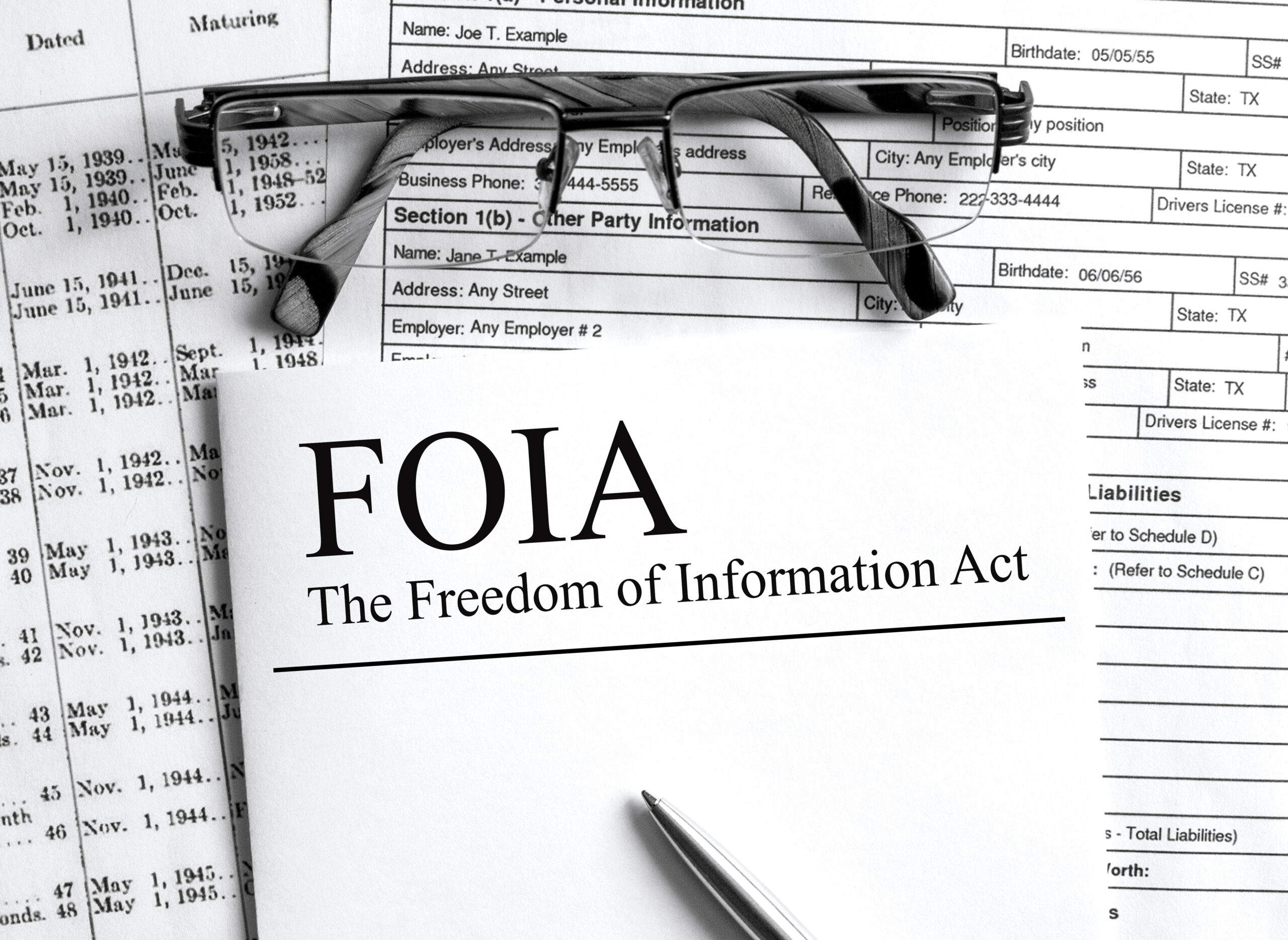
What is FOIA, and why does it matter after a car accident?
Most people know that a police report is typically generated after a collision—but that report is only the tip of the iceberg. Under Virginia’s Freedom of Information Act (Va. Code § 2.2-3700 et seq.), you have the right to request a wide range of records from law enforcement agencies, including materials that go far beyond the basic crash report. A FOIA request can potentially yield 911 call recordings from eyewitnesses, body-worn camera footage, photographs of the vehicles and scene, witness statements and contact information, copies of the other driver’s identification, and detailed incident reports that outline the full scope of the officer’s investigation—including any drug or alcohol testing conducted at the scene. Accessing this evidence early can be the difference between winning and losing your case.
How can 911 calls and body-worn camera footage help prove my case?
911 calls are generally recorded and can typically be disclosed through a FOIA request. Eyewitnesses who call in a collision will often provide raw, real-time accounts of what happened—who ran the light, who was speeding, or who appeared impaired. These recordings are powerful evidence on liability—meaning they help prove who was at fault for the collision. In fact, 911 audio can reveal what witnesses observed in real time, providing context that a written police report may never capture. However, many agencies will typically purge 911 recordings on a set schedule, so it is critical to submit your request as soon as possible to ensure they are preserved. Similarly, body-worn camera (BWC) footage captured by responding officers is invaluable. While Virginia does not have a statewide mandate requiring all officers to wear body cameras, most police departments are now equipped with them, and officers will generally activate their cameras during a crash investigation. BWC footage captures statements made on the scene—statements that are generally far more reliable than what a defendant may later claim in a deposition or at trial. It is not uncommon for an at-fault driver to “change their story” after the fact (for example, claiming they had a green light when their on-scene statement admitted the light was red). Body-worn camera footage locks in those initial admissions and exposes inconsistencies.
What about drunk driving cases—can FOIA help there too?
Absolutely. Whether we like it or not, impaired driving remains a leading cause of serious collisions. When police suspect a driver is under the influence, their investigation will typically generate a wealth of evidence—field sobriety test videos, breathalyzer or blood draw records, officer observations, and arrest documentation. All of this material can be obtained through a FOIA request. This matters because Virginia law permits the recovery of punitive damages—capped at $350,000—when a defendant’s conduct is willful or wanton, such as driving drunk. Securing FOIA evidence that documents intoxication can open the door to this significant additional damage component, on top of your compensatory recovery for medical bills, lost wages, and pain and suffering.
What other evidence can a FOIA request uncover?
In the course of their investigation, officers will often canvas nearby businesses and residences for surveillance footage. This includes commercial security cameras at gas stations, shopping centers, and restaurants, as well as residential doorbell cameras (such as Ring) and home security systems that may have captured the collision or the moments leading up to it. Officers will also frequently secure dashboard camera (dashcam) footage from the vehicles involved in the collision, as well as from witnesses who stopped at the scene—this footage often provides a direct, unobstructed view of how the accident unfolded and is typically available through a FOIA request once it becomes part of the police file. If an officer secures a copy of critical video—such as footage showing the moment of impact or the other driver running a stop sign—that video generally becomes part of the police file and is likely obtainable through FOIA. This is especially important because business owners or homeowners may refuse to cooperate with an injured person’s attorney directly, or their systems may overwrite footage on a short loop. When the police have already collected a copy, a FOIA request puts that evidence in your hands without needing to file a lawsuit first. Officers may also coordinate with the Virginia Department of Transportation (VDOT) to obtain traffic camera or highway monitoring footage from state-maintained roadways and intersections—footage that can be equally critical in reconstructing how a collision occurred. Additionally, FOIA requests can surface records you may not even know exist: supplemental incident reports, tow records, dispatch logs, communications between officers, and even transportation department records related to the roadway or intersection where your accident occurred. Sometimes a closer review of the police report itself will reveal that officers collected materials—photographs, witness interviews, or video—that are never mentioned in the report’s narrative but are nonetheless sitting in the investigative file, available upon request. The key takeaway is this: time is not on your side. Agencies purge recordings, footage gets overwritten, and files are archived.
How quickly do I need to act?
Virginia law requires agencies to respond to a FOIA request within five business days, but that timeline only helps if the records still exist when you ask for them. Many departments typically retain 911 recordings and body-worn camera footage for as few as 30 to 90 days before they are automatically deleted. Surveillance footage from private businesses—even copies held by police—may be overwritten even sooner. Beyond evidence preservation, Virginia’s statute of limitations for personal injury claims is two years from the date of the accident, so building your case early gives your attorney the strongest foundation to negotiate a fair settlement or take your case to trial.
What about if the other driver hits me and runs?
Hit and run accidents present unique challenges—but also unique opportunities to hold the at-fault driver accountable. Under Virginia law, the driver of any vehicle involved in an accident resulting in injury, death, or property damage must immediately stop, report their name, address, driver’s license number, and vehicle registration number to law enforcement or to the injured person, and render reasonable assistance to anyone who was injured. Leaving the scene of an accident that causes injury or death, or that causes more than $1,000 in property damage, is a Class 5 felony under Va. Code § 46.2-894. This is where FOIA becomes critical: requesting police records, 911 calls, body-worn camera footage, and any surveillance video the officers collected can help identify the fleeing driver and build a compelling case.
Importantly, a new Virginia law effective July 2026 now allows plaintiffs to recover punitive damages against hit and run drivers. Under Va. Code § 8.01-44.5:1, in any personal injury or wrongful death action arising from conduct that constitutes a felony violation of the hit and run statute (§ 46.2-894), punitive damages may be awarded. Punitive damages are an additional monetary award designed to punish the wrongdoer for especially reckless or egregious behavior—they go beyond compensating you for your actual losses and send a message that this type of conduct will not be tolerated within Virginia.
FOIA evidence is often the key to proving a hit and run: 911 recordings may capture witness descriptions of the fleeing vehicle, body-worn camera footage may show officers canvassing the area or interviewing witnesses, and police files may contain surveillance footage, license plate information, or other leads that help identify the responsible driver. By obtaining this evidence quickly, your attorney can build a case that not only establishes liability but also potentially supports a claim for punitive damages under Virginia’s new hit and run statute.
Our experienced attorneys know exactly which agencies to contact, how to frame the request to capture the broadest range of relevant materials, and how to use those records to build the strongest possible case—often increasing the value of your claim well before a lawsuit is ever filed. If you have been injured in an auto collision in Virginia, do not wait. Consult with our personal injury attorneys who can submit FOIA requests immediately to preserve every piece of available evidence before it disappears.
This article is for informational purposes only and does not constitute legal advice. Employers should consult with qualified legal counsel regarding the application of this law to their specific circumstances.